
未來大學 開創未來
Pioneering the Future
提升自我實踐能力 To Elevate Self Actualization
促進群體智慧累積 To Advance Collective Intelligence
增進社會共同意識 To Promote Commonwealth Society


Office of Future NTU Initiatives


Upholding an evidence-based approach, NTU has established the "Office of Future NTU Initiatives," which promotes the concept and outcomes of Future NTU through forums and workshops. Additionally, NTU facilitates discussions about talent cultivation with domestic and international universities, aiming to foster consensus and drive innovation in higher education.
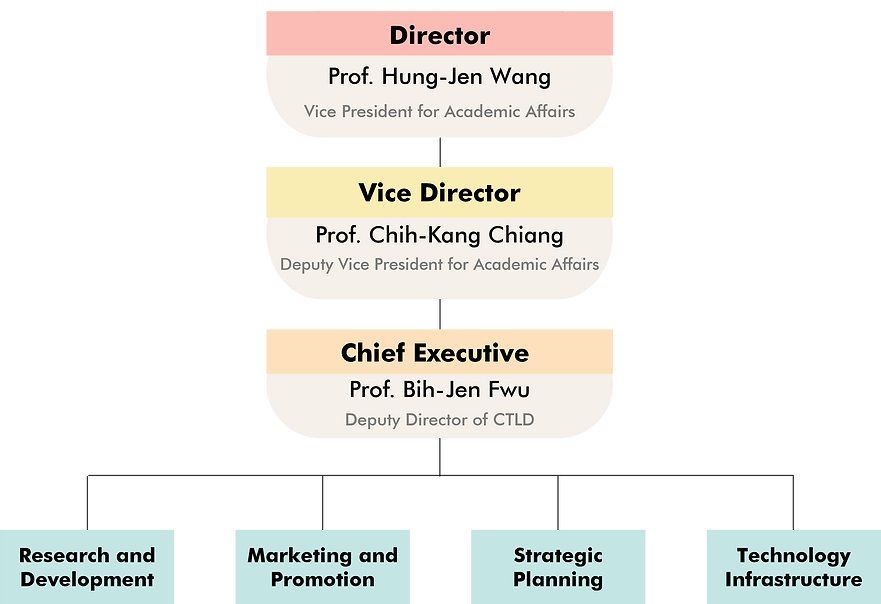
Organization
Future NTU Initiative Base


Partners
01
The Academic Advising Office
The mission of the Academic Advising Office (AAO) is to help NTU students develop academic and career paths tailored to their goals through academic advisors’ one-on-one professional academic guidance. In addition, the AAO builds a holistic advising network to provide comprehensive advising services by gathering professional mentors, including industry experts and NTU faculties, as well as peer mentors from various backgrounds. By connecting students to resources that align with their objectives, the AAO enables students to explore and make informed decisions about their academic and career pursuits, facilitating their adaptive development and maximizing their potential.
03
University Interdisciplinary/College Interdisciplinary Bachelor's Program
The "University Interdisciplinary Bachelor's Program" and the "College Interdisciplinary Bachelor's Program" aim to break current departmental boundaries and build flexible learning pathways. Students have the opportunity to combine cross-college/department courses based on personal interests to design their own exclusives based on their personal interests. This enables them to craft a customized bachelor's degree that integrates knowledge from diverse fields of study. Students are thus more equipped to thrive in the fast-changing world and to emerge as future leaders.
05
NTU AR: Alumni Return and Recharge
NTU AR (Alumni Return and Recharge) is a service designed for alumni to return to school, providing them with the opportunity to audit high-quality physical and online courses. The inclusion of alumni creates an intergenerational learning environment—it not only brings new stimuli to the classrooms but also fosters a strong network between alumni, current students, and the university.
02
Specialization Programs
Specialization Programs are designed to "strengthen the foundation" and "foster interdisciplinary innovation." Each Specialization Program is composed of 4 to 5 courses (including capstone courses) and emphasizes both clear curriculum alignments and the interconnectedness between courses. It highlights the development focus of each department and offers a clear and comprehensible path for students to select their courses. By taking courses from a certain specialization program, students could achieve in-depth learning with a focused direction and interdisciplinary learning.
04
The Exploratory Learning Project
Under the traditional curriculum, students would have to take a leave of absence to engage in “extracurricular activities” such as starting a business, volunteering in rural areas, exploring future paths, and conducting field studies. With the Exploratory Learning project, students can now maintain their student status and continue to have access to the university’s resources while learning off-campus for up to four semesters. The Exploratory Learning course is listed for two credits.
06
Digital Campus
As NTU transitions into a "Digital Campus," the university aims to alleviate physical space constraints and construct a "learner-centered" teaching environment. This includes integrating concepts and methods such as Internet of Things (IoT), Bring Your Own Device (BYOD), and Project Based Learning (PBL) into classroom settings. In addition, a Learning Management System is also implemented to assist in teaching. With the aid of technology, students from a Digital Campus could learn anywhere, without necessarily being in a classroom.